Cody Plane Fragment
In early 2026 an important new addition was made to the Cody Gallery in the Aldershot Military Museum, when a fragment of Samuel Cody’s last aeroplane was put on display. This artefact of great historic interest was acquired by the Friends of the Aldershot Military Museum.
The story began in December 2022 when the Friends of the Aldershot Military Museum were contacted by the Community Manager at the Aldershot Military Museum for help in acquiring this remarkable piece of memorabilia which was coming up for sale at auction in 2023. The item was a letter written on a piece of fabric which had been cut from the aeroplane in which aviation pioneer Samuel Cody had been killed when he crashed in 1913. The Friends were delighted to be able to bid for this historic item for presentation to the Museum, to add to the existing collection in the Museum’s Cody Gallery. The fragment underwent extensive conservation work at the headquarters of the Hampshire Cultural Trust before being returned to the Aldershot Military Museum for display.
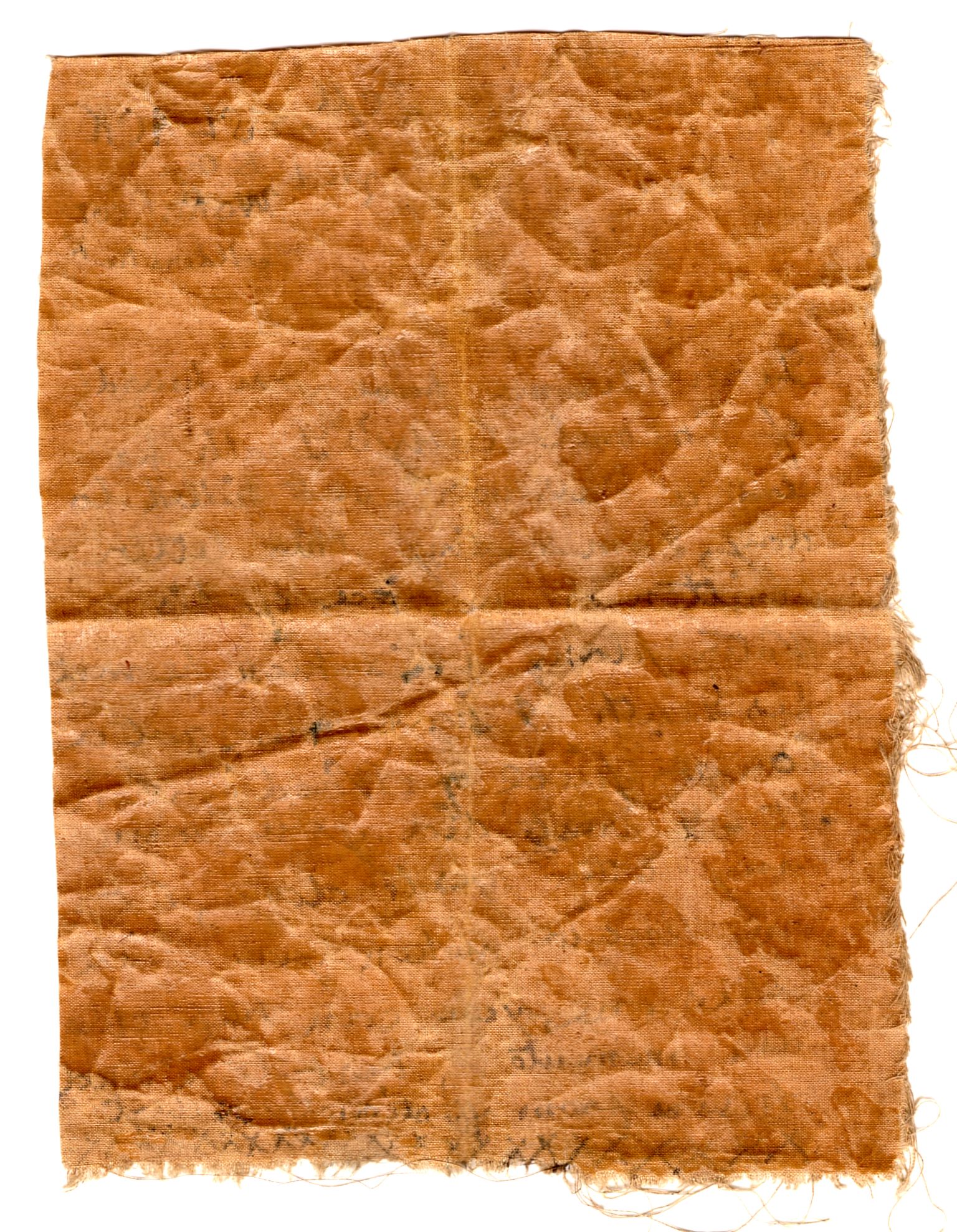
The front of the linen fragment showing the surviving waterproof coating applied to strengthen the aircraft fabric.
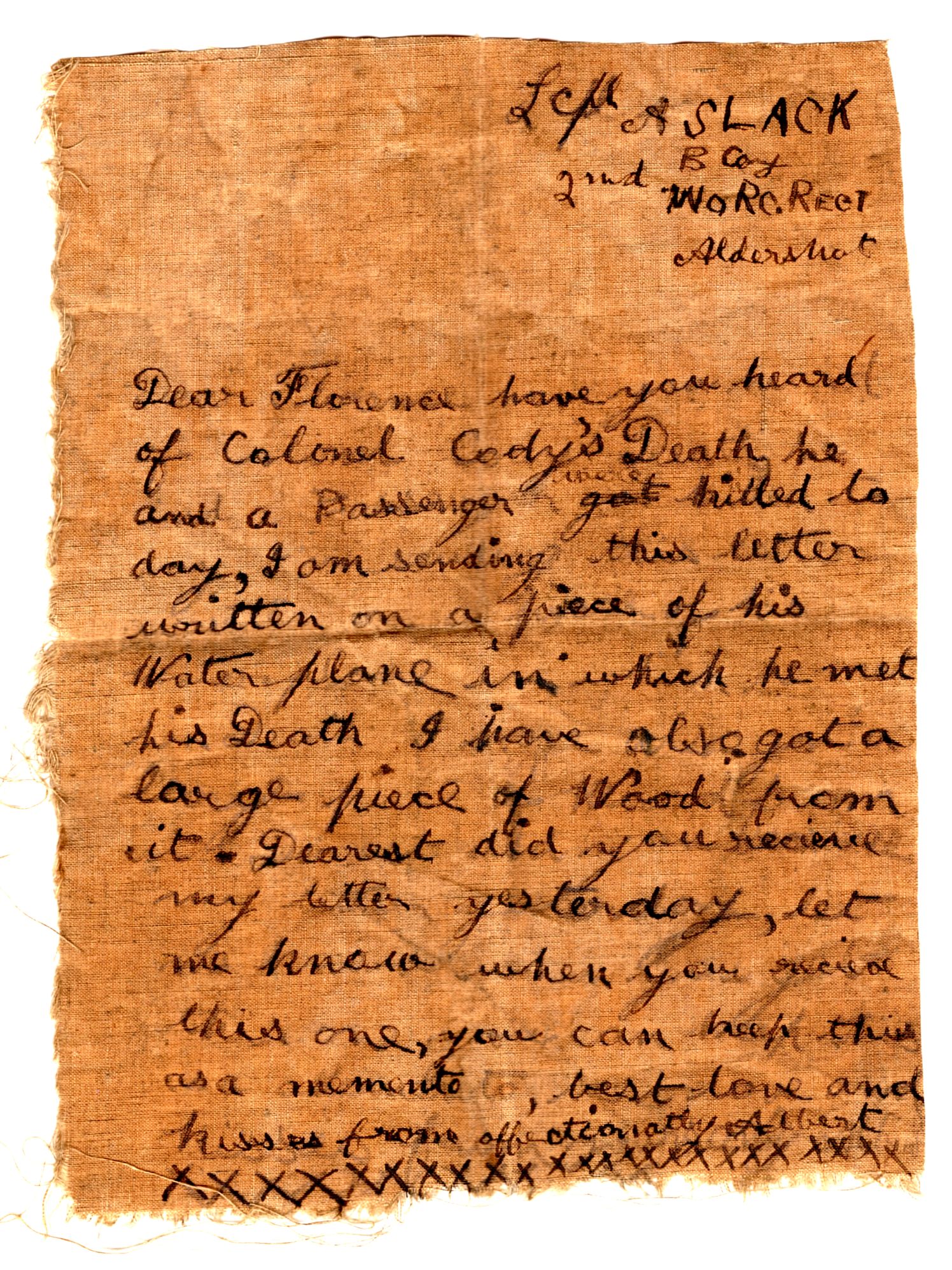
The reverse of the fragment, where Lance Corporal Albert Slack wrote his letter to Miss Florence Jones.
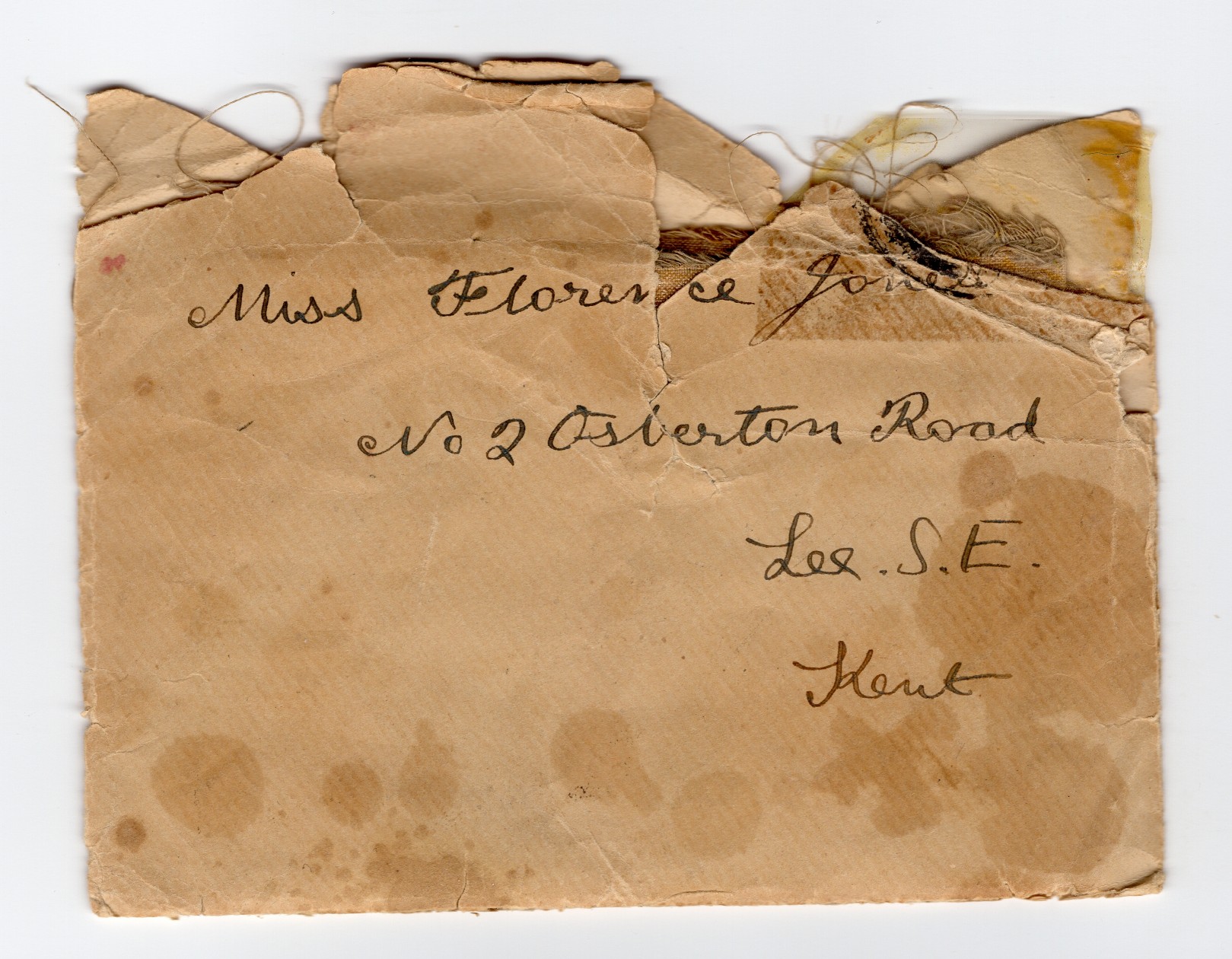
The original envelope used by Slack to send the fragment, addressed to Miss Florence Jones.
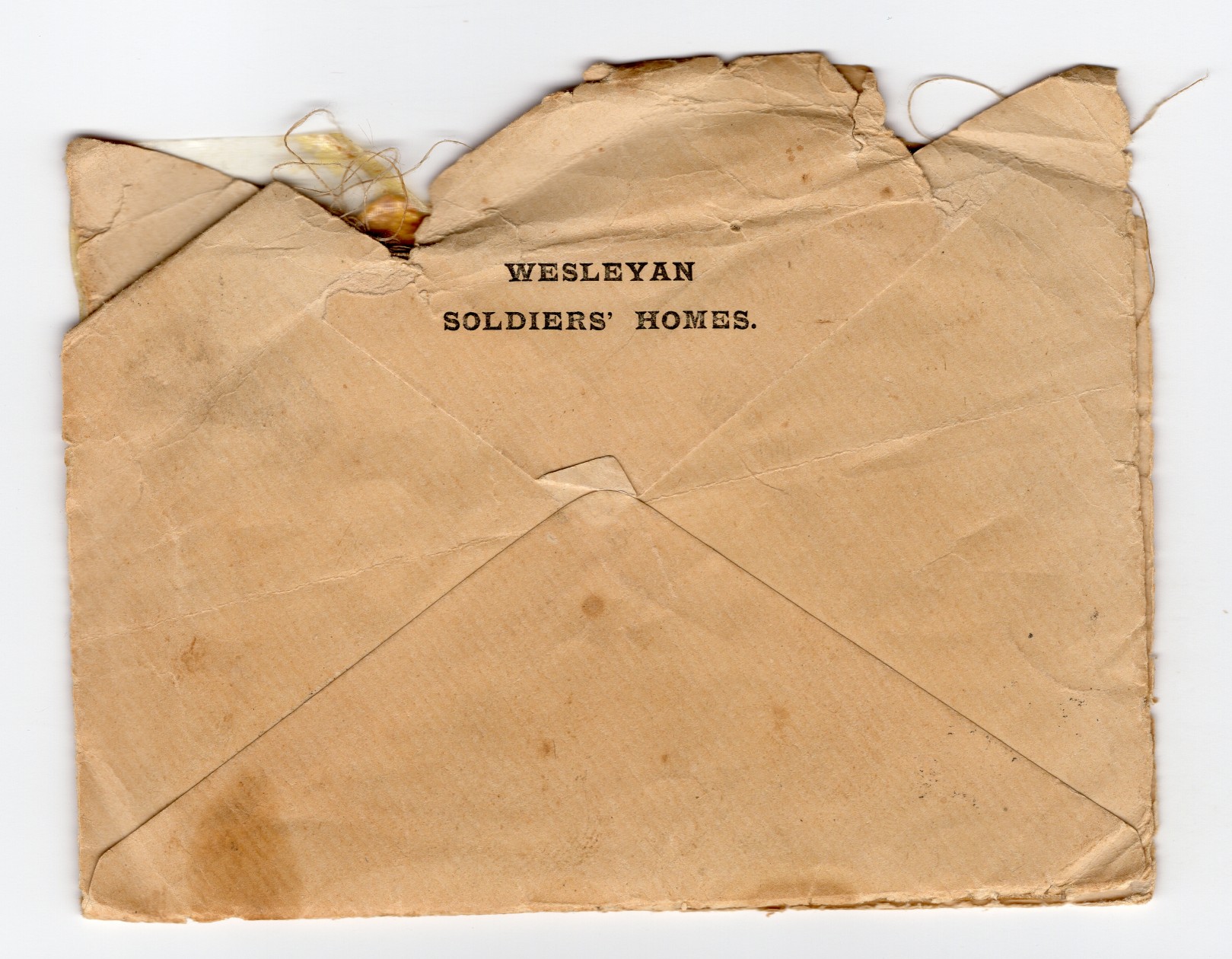
The reverse of the envelope, printed with “Wesleyan Soldiers’ Homes”, linking it to Corunna Barracks in 1913.
The American inventor Samuel Franklin Cody came to Aldershot in 1904 to promote his man-lifting kites. Cody demonstrated his system on Queen’s Parade, and the Army were sufficiently impressed to appoint him as instructor of kiting at the Balloon School in Aldershot Camp. At this time the Army was looking for another site for the Balloon School and Factory, as they wanted more space to expand. They chose a site a few miles further north on Laffan’s Plain at Farnborough, to where the Balloon School and Factory was moved over the winter of 1904-1905. Cody moved with them, and it was in his workshop at Farnborough that Cody designed and built British Army Aeroplane No.1. On 16 October 1908 Cody successfully flew his aeroplane for 440 yards at a steady height of 30 to 40 feet. This was the first powered flight to be made in Britain.
Over the next few years Cody constantly developed his planes, making them more powerful and reliable. In 1913 he built a new biplane to compete in the Coastal Circuit of Great Britain Race, to which he added floats and experimented on the Basingstoke Canal. Prior to carrying out sea trials Cody took up a number of people locally as passengers. On 7 August 1913 he had the renowned cricketer W.H.B. Evans as his passenger. Flying over Laffan’s plane, Cody was preparing for his descent when the plane appeared to double up in the centre and crashed into a group of oak trees. Both pilot and passenger were killed instantly.
The linen fragment was taken from the crashed plane by Lance Corporal Albert Slack of the 2nd Battalion Worcester Regiment. On one side the linen still has remnants of the waterproof coating applied to the material to strengthen it for the aircraft. On the back of the fabric Lance Corporal Slack wrote a letter and sent it to Miss Florence Jones of Lee in Kent. It remained in the family and the vendor was Miss Jones’s granddaughter.
Interestingly the plane fragment came with the original envelope in which Lance Corporal Slack sent it to Miss Jones. On the back of the envelope is printed “Wesleyan Soldiers’ Homes”. In 1913 Lance Corporal Slack’s battalion was stationed in Corunna Barracks, just across Queen’s Avenue from the Smith-Dorrien Wesleyan Soldiers’ Home. It is easy to imagine Lance Corporal Slack walking over to the Smith-Dorrien to get an envelope and writing his letter there. Having this envelope adds considerably to the provenance of the artefact. Albert Slack was killed in action on the Western Front on 13 August 1915.
The text of the letter on the fragment reads:
L Cpl A Slack B Coy 2nd Worc Regt Aldershot Dear Florence have you heard of Colonel Cody’s Death he and a passenger got killed to day, I am sending this letter written on a piece of his Water plane in which he met his death. I have also got a large piece of wood from it. Dearest did you receive my letter yesterday, let me know when you receive this one, you can keep this as a memento. Best love and kisses from affectionately
Albert